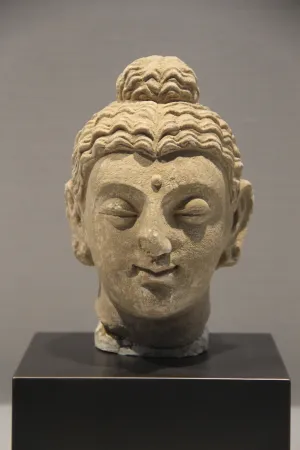
Biography
Siddhartha Gautama, who became known as the Buddha ("the awakened one"), was born a prince in ancient India. Despite a life of luxury, he was deeply moved by the suffering he witnessed and renounced his privileged existence to seek the cause of and liberation from suffering.
After years of extreme asceticism and study with various teachers, he finally sat beneath a bodhi tree and vowed not to rise until he had found the truth. On the night of the full moon, he attained complete enlightenment, seeing clearly the nature of mind and the path to liberation from suffering.
For the remaining forty-five years of his life, the Buddha traveled throughout India teaching what he had discovered. His teachings, known as the Dharma, emphasized the Middle Way between extremes, the Four Noble Truths, and the Eightfold Path. His influence on human civilization has been immeasurable.
Teaching and methods
The Buddha taught mindfulness and meditation as the means to directly observe the nature of experience. Central practices include awareness of breathing, investigation of the impermanent and selfless nature of all phenomena, and the cultivation of compassion and equanimity. He taught that through sustained observation of how suffering arises from craving and identification, the mind naturally releases its grip, revealing the unconditioned peace that was always present.
Selected quotes
“ Do not learn how to react. Learn how to respond. ”
“ To have everything is to possess nothing. ”
“ Believe nothing, no matter where you read it, or who said it, no matter if I have said it, unless it agrees with your own reason and your own common sense. ”