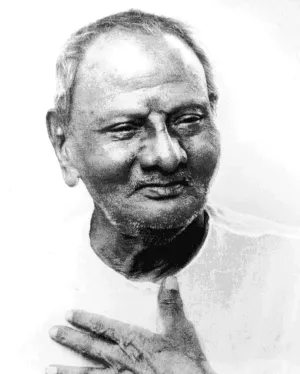
Biography
Nisargadatta Maharaj was an Indian spiritual teacher who lived and taught in the bustling city of Mumbai. A simple shopkeeper who sold bidis (Indian cigarettes), he received initiation from his guru Sri Siddharameshwar Maharaj and attained realization within three years of dedicated practice.
Unlike many teachers who withdrew from worldly life, Nisargadatta continued running his small shop while receiving seekers in his modest apartment. His teachings were recorded in the book "I Am That," which has become one of the most influential spiritual texts of the modern era, introducing countless Western seekers to non-dual wisdom.
His teaching style was direct and uncompromising, often challenging students' assumptions and pointing relentlessly to that which exists prior to consciousness itself. He emphasized the importance of staying with the sense "I Am" as the gateway to recognizing one's true nature beyond all states and experiences.
Teaching and methods
Abidance in "I Am": Nisargadatta taught seekers to hold onto the pure sense of being—the feeling "I Am" before it becomes "I am this" or "I am that." Through sustained attention to this primal sense of existence, one eventually recognizes what lies beyond even this sense. He emphasized understanding over practice, urging students to investigate their assumptions about reality and identity until the truth becomes self-evident.
Selected quotes
“ Accept this identification only: that you are this manifest pure beingness, the very soul of the universe, of this life that you observe, and presently you are just wearing this bodily attire. ”
“ You are free once you understand that your bondage is of your own making and you cease forging the chains that bind you. ”
“ To know you are a prisoner of the mind is the dawn of wisdom. ”